Why "The Programme" programme refuses to promise you a new job. /
What it promises instead.
I want to show my working, because you're the kind of person who checks. I have seen, through my work with individuals, the public sector, charities and corporates that there is an enormous amount of desire to do something good in a world that feels broken. What is often lacking is the space to let people find their place in this change.
The theory of change: why this matters beyond you.
There are three things are true at once, and together they describe a system failure this programme exists to leverage to create change for good.
First: the desire for meaningful work has never been higher: around nine in ten millennials and Gen Zs say purpose matters to their satisfaction, and nearly half have left a role over it. Second, the front door to "impact careers" is narrowing: economic pressure and the ESG backlash have companies folding sustainability teams into other functions and filling fewer dedicated roles, while recruiters report unprecedented volumes of applicants for the roles that remain. So we have more people than ever pushing at a door that's getting smaller. Finally, and this is the part the queue can't see: the work itself didn't shrink, it moved. More than half of green hires now sit in non-green job titles, and demand for green skills is growing roughly twice as fast as supply. Sustainability stopped being a department and became a property of ordinary jobs: finance, operations, procurement, product. The impact economy's biggest untapped workforce is people already inside mainstream organisations.
Under the weight of rapid societal, technological and environmental change and rising debt, UK infrastructure is struggling. Civil society (local and national community gropups, charities etc) is trying to step in to address some of these problems. These organisations are quietly starving for exactly the skills mid-career professionals have. Four in five UK charities have at least one trustee vacancy, a third unfilled for over a year, with boards naming gaps in marketing, communications, legal, technology and finance, while formal volunteering has fallen to its lowest level since records began. Local, place-based organisations don't need more people who want an impact job. They need people with ideas, skills and passion who'll show up while keeping the job they have.
Put those together and the highest-leverage move for one person and for the system is the same move: don't join the lengthening queue for a shrinking set of purpose-branded roles. Act from where you are, inside a business where sustainability is becoming everyone's job, or alongside your career, in the organisations that need your skills most and can pay for them least. Every person who makes that move adds capacity to the transition instead of waiting for permission to join it - whilst at the same time giving you skills, experience and a story that positions you for the next step in you current job, company or a totally new one. That's what this programme is built to produce: not applicants, but people who do.
The promise problem.
Career programmes sell destinations. The research measures something else entirely: what career support reliably improves is not job placement but your ability to navigate the next step with perspective and clarity, not a guaranteed arrival. A major meta-analysis identified what actually drives results: structured written exercises, individual feedback, support for your decisions, and contact with people who've done what you're considering (Whiston et al., 2017). So when a programme promises you a new career, it's promising the one thing the evidence says it can't control, and often skipping the ingredients the evidence says matter. This programme is built the other way round.
Why experiments, not plans. Herminia Ibarra's research at London Business School, the best work we have on how professionals actually change (Working Identity), found that successful transitions almost never come from introspection followed by a plan. They come from small real-world experiments that let you test possible versions of yourself before committing. You act your way into new thinking, not the reverse. That finding is the spine of this programme.
Why we start from where you are.
The largest annual survey of working millennials and Gen Z (Deloitte, 2025) shows the tension this programme exists for: roughly nine in ten say purpose is important to their satisfaction, while nearly half no longer feel financially secure, and most now prefer gradual, lateral moves over dramatic jumps. People want meaning and cannot afford recklessness. Whether you ultimately stay or go, the highest-leverage next move is to create impact from the position, credibility, and knowledge you already hold.
Why the transition should be worth living in.
Ibarra's research puts real career transitions at three to five years. Read that number honestly and the industry's model becomes absurd: it treats those years as a corridor, a grim in-between you hurry through, meaning deferred until arrival. Three to five years is not a corridor. It's a meaningful chunk of your one life. I refuse the deferral. The experiments you run here create meaning in the transition, not after it. If you end up making a bigger move, you'll make it from evidence and momentum rather than desperation. And if you end up staying, you won't have been waiting at all. You'll have been living.
Why a cohort, and why it's small.
The single strongest predictor of whether people finish a programme and act on it is whether they're doing it alongside others. Cohort-based programmes see completion rates of 85 to 96 per cent; self-paced courses often single digits. Small groups with fixed dates and structured peer accountability are where the effect peaks. That's why this runs at nine to twelve people with pods of three, using a structured action learning protocol with sixty years of practice behind it, not a WhatsApp group and good intentions. There might be other courses you need to do, there are plenty of great digital learning tools that are very affordable. This group will keep you towards your goal.
Why the inner work comes first.
High achievers and people who have spent a long time building a career carry a specific trap: identity is wedded to role, lifestyle, competence, and status. Skip that examination and people pursue purpose with the same patterns that made them successful and unfulfilled, just pointed in a new direction. The first fortnight works on identity, the voices you've internalised, and the versions of yourself you're avoiding and hoping for. Then the action lands on honest ground.
Why small actions.
The behaviour change evidence (implementation intentions) shows the gap between intending and doing closes when actions are specific, small, situated, and socially committed. Grand plans die quietly. A small experiment, designed precisely, with three people expecting to hear how it went on Thursday, happens.
Why evidence, not certainty
Most people wait to feel certain before they move. Career transitions rarely work that way. You get clearer by collecting evidence from lot's of different places (the conversations, events you attended, the courses you took) and trying on new forms of identity. Some evidence points you forward. Some rules things out. Both are useful. This programme is built around that discipline: reduce uncertainty step by step, rather than pretending you can think your way to the answer in advance.
Why coaching.
This is the big question and the small question. Chances are that what is getting in your way isn't a straightforward lack of contacts, lack of knowledge, lack of opportunity or a weak C.V. Chances are that there is a muddle of things, psychological, practical and emotional barriers that are holding you back. We will touch on these issues during our sessions and I aim to create a safe space where these discussions are possible. For those topics that are too difficult for group work, I offer 1:1 coaching alongside the programme.
I said earlier that coaching isn't therapy. It isn't, but sometimes creating forward momentum does require unblocking some of the things that are holding you back. Perhaps there are a set of voices that speak to you in moments that aren't helpful. Perhaps you hold assumptions about you, your work or your ability that need challenging. All of these things are topics that good coaches are able to work with. Sometimes they are too big and they cannot be overcome in three sessions. I won't upsell you coaching, but i cannot promise rounded results over three sessions either. For those that want it, we can book in extra sessions during and following the programme to support you.
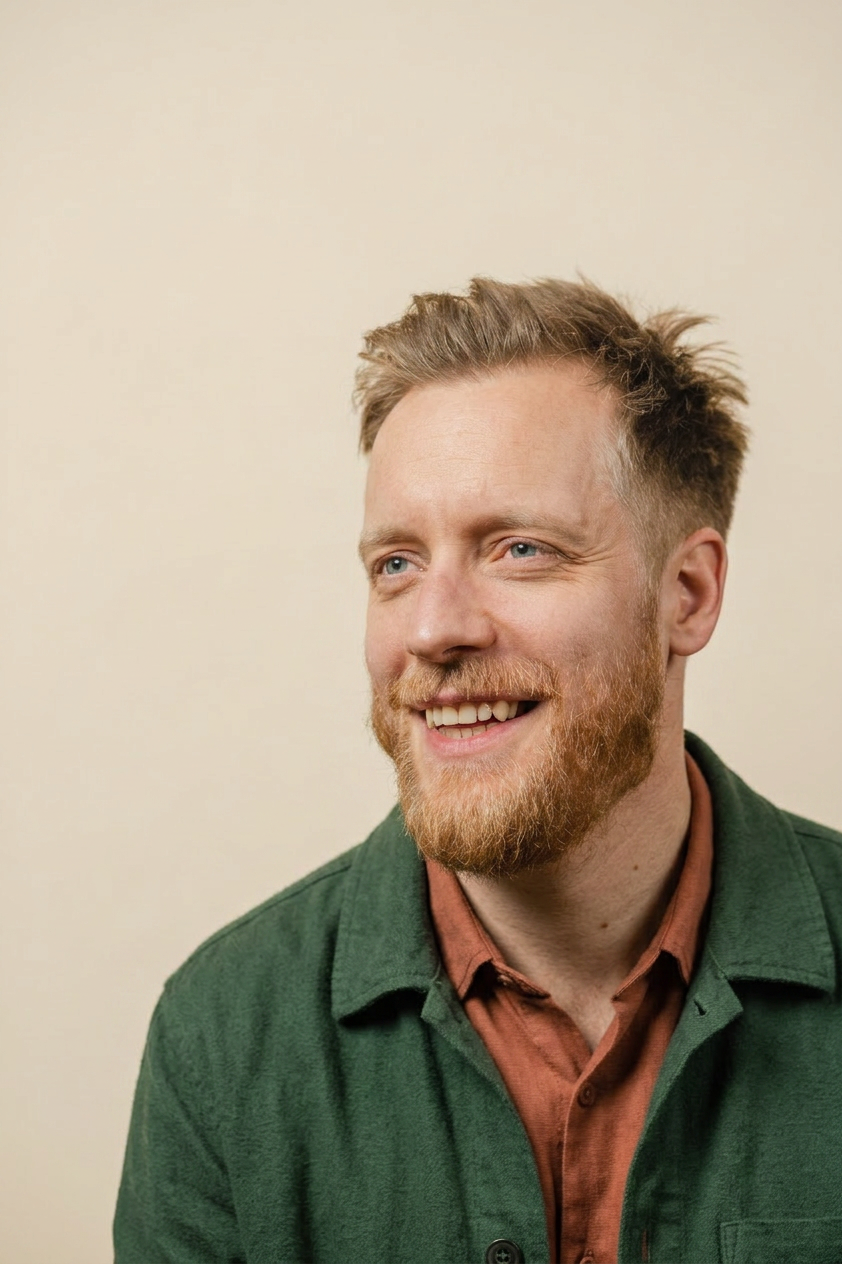
"Create the impact from where you are, and let the evidence decide where you go."
Why this programme exists /
I changed career direction, twenty three years ago: a sideways step from marketing into climate and impact. Since then I have worked for some of the worlds and UK's leading organisations around impact and sustainability. Since that day over 20 years ago, I have worked across the sustainability and impact space, working in technology, assessment, social good and civil society. I've been in mega corporations with canteens, baristas and lifts and I've worked for organisations where there are 6 people in a small room!
Over the last 10 years I have focussed on helping people find their own place in this complex, messy world so that they can create a positive impact on others and in their own lives. I think it is important to show where I have worked in this space so you know that I have some experience and perspective that is useful helping you not only find your path, but to navigate a change in your career.
Where this programme comes from: /
The closest ancestor of this programme. /
At Xynteo I led, delivered and supported programmes such as LEAP, SSLP, Europe Delivers and the Leadership Vanguard: six to nine month cohort programmes helping senior people at companies like Unilever, Baker Hughes, and EDP create real change from the roles they already held. These projects were built around improving complex social, environmental problems whilst also driving growth. Same question as this programme, redesigned for people without a corporate sponsor.
Inside the career transition industry. /
I delivered the Associate Programme at On Purpose, the UK's best-known career transition organisation. I've seen from the inside what genuinely helps people and spoken to people making major changes to their life. This programme takes inspiration from that experience. For those able to get on to this course, I have seen the transformation it can drive and recommend it wholeheartedly. For those that can't wait, I offer this course as a way to get started.
Behaviour change that actually happened. /
At the Carbon Trust I was the behaviour change lead and developed programmes for public and private sector organisations based on changing behaviorus for social and environmental good. I spent five years running behaviour led programmes helping individuals drive impactful change in their organiastions. Alongside this I did a Post Graduate Degree in Behaviour change and have led national schools campaigns, international programmes to support communities and built educational collatoral and interactive tools. Since then I worked on behaviour change programmes at Waste and Resource Action Plan (WRAP) and UKGBC
Rooms where decisions got made. /
At PwC and Xynteo I designed large-scale collaboration, including work with multinationals in regenerative and extractive businesses including Uniliver, Heineken, NHS, Coca Cola, Hubbub and bids at the £14 million scale: rooms full of competing interests, turned into decisions. I understand the difficulties and practicalities of doing good inside and outside of major corporations. Those methods are the systems tools in this programme.
Alongside my day job. /
I value community and find that volunteering gives me a different type of impact that I feel a different kind of conection to. My coaching practice provides pro-bono support to circular businesses through Re-London. I have recently started volunteering at Haringey Giving, a grass roots organisation who's exist to enable positive change through local giving in Haringey
Accredited coach. ICF accredited (ACC, Barefoot Academy). /
I coach founders and senior professionals on exactly what this programme works on: identity, direction, and the gap between intending and doing.
Where the method comes from. /
This programme is those five things combined: leadership programme design, career transition delivery, behaviour change science, systems facilitation, and coaching. I believe this combination is unique and a powerful approach to drive change. That's the honest reason it exists as a business.
Why I built it.
I keep meeting brilliant mid-career people who want to create impact, but didn't know how to get involved. People that wanted to respond to the chaos in the world, but feel trapped by their situation or just uncertain about what to do next. For those able to invest more time, there are a few other organisations that I would recommend (go here for my recommendations). This is for everyone else: create the impact from where you are, and let the evidence carry you. It's the only move I've ever lived.


